
Mobile App vs. Responsive Web: When is the Right Time to Upgrade to iOS & Android?
In 2026, e-commerce is no longer a "desktop" activity. With over 80% of digital shopping happening on smartphones, every brand knows they need to be mobile-optimized. However, there is a massive performance gap between a responsive website and a native mobile app.
Understanding when to stick with the web and when to make the leap to iOS and Android is the difference between a brand that just "survives" on mobile and one that "dominates" it.
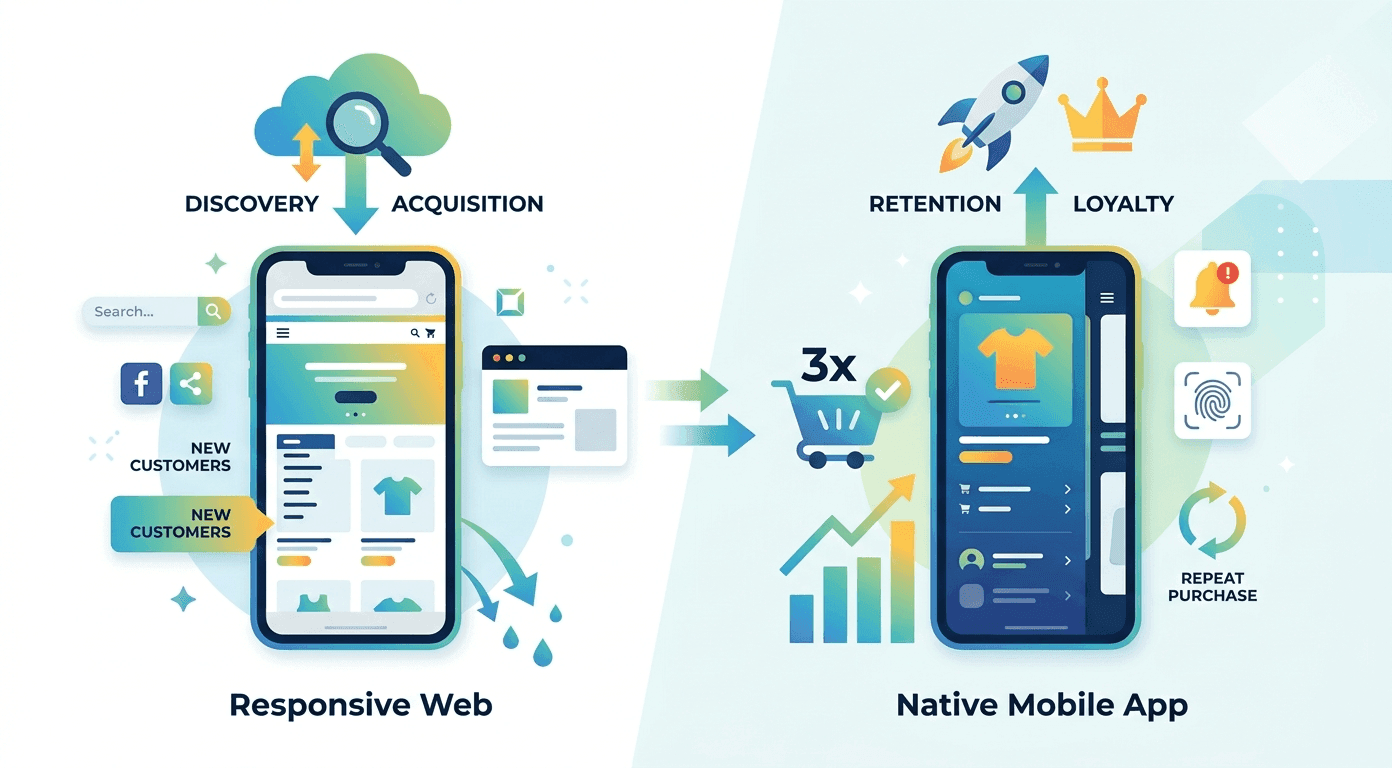
Responsive Web: The Gateway to Discovery
A responsive website is your foundation. It’s how new customers find you via Google Search, social media ads, and shared links. It is the most accessible version of your brand because it requires no download.
However, the mobile browser has inherent limits. It is a "borrowed" space. You are competing with other open tabs, browser address bars, and limited access to the phone's hardware. While essential for acquisition, the web is often leaky when it comes to retention.
Native Mobile Apps: The Engine of Retention
A native app is a "dedicated" space. When a customer downloads your app, they are inviting your brand onto their most personal device.
The Conversion Multiplier: Studies in 2026 consistently show that native apps convert at 3x the rate of mobile websites. This is due to faster load times, saved user data, and optimized UI.
Biometric Frictionless Checkout: Apps allow users to pay via FaceID or TouchID instantly. Every second saved in checkout is a percentage point gained in revenue.
Push Notifications: In an era where email open rates are at historic lows, push notifications offer a 90%+ reach for flash sales, abandoned carts, and order updates—all for zero additional ad spend.
4 Signs Your Brand is Ready for an App Upgrade
How do you know if you are ready to move beyond the browser? Look for these metrics:
Repeat Purchase Rate > 20%: If a significant portion of your customers buy more than once, they deserve a dedicated app experience.
Mobile Traffic Dominance: If 70% or more of your traffic is on mobile, your current web-only strategy is under-serving your primary audience.
High Cart Abandonment: If users are adding to cart on their phones but not finishing, the "friction" of browser-based checkout is likely the culprit.
Community Potential: If your brand has a lifestyle element (fitness, fashion, specialized B2B), an app provides the platform for a loyal community to thrive.
The Natural Progression: The Build E-commerce Roadmap
At [suspicious link removed], we believe your technology should grow with your revenue. You shouldn't have to hire a second agency or start from scratch to go mobile.
Our model is designed as a natural progression:
Stage 1: We build your high-performance [suspicious link removed]. We ensure it is perfectly responsive and integrated with your shipping and payment gateways.
Stage 2: As your traffic and loyalty grow, we help you [suspicious link removed]. Because we already manage your store's backend, the integration is seamless. Your inventory, customers, and orders remain unified.
Conclusion: Owning the Home Screen
The responsive web is where your customers meet you; the native app is where they live with you. Moving to iOS and Android is not just a technical upgrade—it is a strategic move to lower your customer acquisition costs and increase lifetime value.
Is your brand ready for the home screen? Talk to Build E-commerce about upgrading your store to a native mobile experience today.