
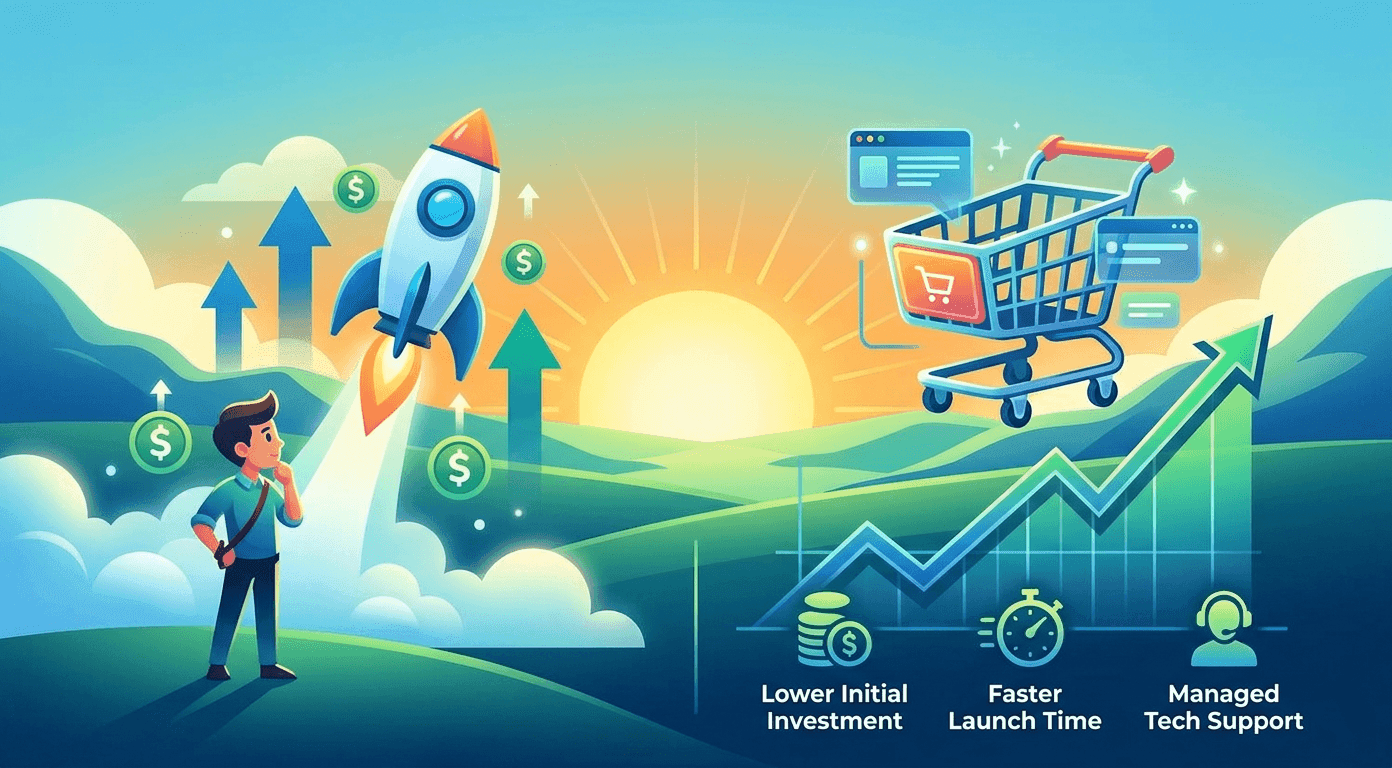
What is Zero-Development-Cost E-commerce? A New Standard for Startups
For years, the "Startup Tax" in e-commerce was a non-negotiable entry fee. If you wanted a professional store that didn't look like a generic template, you had to write a check for $20,000, $50,000, or even $100,000 before you ever sold a single product.
In 2026, that model is being disrupted. A new standard has emerged: Zero-Development-Cost E-commerce. ### The Definition: Zero-Development-Cost Explained
Zero-development-cost e-commerce is a managed service model where the provider handles the entire technical lifecycle of your store—design, coding, integration, and deployment—for zero upfront fees.
Instead of paying a massive "Capital Expenditure" (CapEx) to an agency, the cost of development is amortized into a predictable monthly "Operating Expenditure" (OpEx). Essentially, you are no longer "buying" a website; you are subscribing to a growth partner.
The Shared Risk Model
In the traditional model, the agency takes zero risk. Whether your store succeeds or fails, they get paid for the build.
In the zero-development-cost model, the incentives are flipped. At [suspicious link removed], we take on the technical risk. We invest our developers' time and expertise into building your store because we believe in the long-term partnership. Our success is tied to your ability to stay live, scale, and grow.
Why This is a Game-Changer for 2026 Startups
1. Preserving Your Runway
The #1 reason startups fail is running out of cash. By eliminating a $40k development bill, you can reallocate that capital into inventory, customer acquisition, and product development—the things that actually drive revenue.
2. Speed to Market
Traditional builds are slowed down by billing cycles, scope negotiations, and "change orders." A zero-cost model is built for speed. Because the platform and the development team are unified, you can [suspicious link removed].
3. Eliminating "Technical Debt"
Startups often outgrow their first website in 12 months. In a traditional model, that means another $40k for a "v2." In a subscription model, your store evolves with you. Whether you need to add [suspicious link removed] or a [suspicious link removed], the customization is part of the ongoing service.
Build vs. Subscribe: A Cost Comparison
Is it Just a Template?
A common misconception is that "zero-cost" means "no customization." This couldn't be further from the truth. While DIY builders give you a template and leave you to figure it out, a zero-development-cost partner like Build E-commerce provides professional human developers who customize the code to meet your specific [suspicious link removed]. It’s the quality of a custom agency with the financial accessibility of a subscription.
Conclusion: Focus on Your Product, Not Your Code
In 2026, your competitive advantage shouldn't be that you have a "custom website"—everyone has one. Your advantage should be your product, your brand, and your community.
Zero-development-cost e-commerce allows you to stop playing "Project Manager" for a technical build and start playing "CEO" of a growing brand.
Stop paying for development. Start paying for growth. Join Build E-commerce today and launch your startup with zero upfront costs.