
B2B2C E-commerce Explained: How to Bridge the Gap Between Wholesale and Retail
For decades, e-commerce was binary. You were either a B2B wholesaler dealing in bulk orders and long-term contracts, or a B2C retailer chasing individual clicks and credit card swipes.
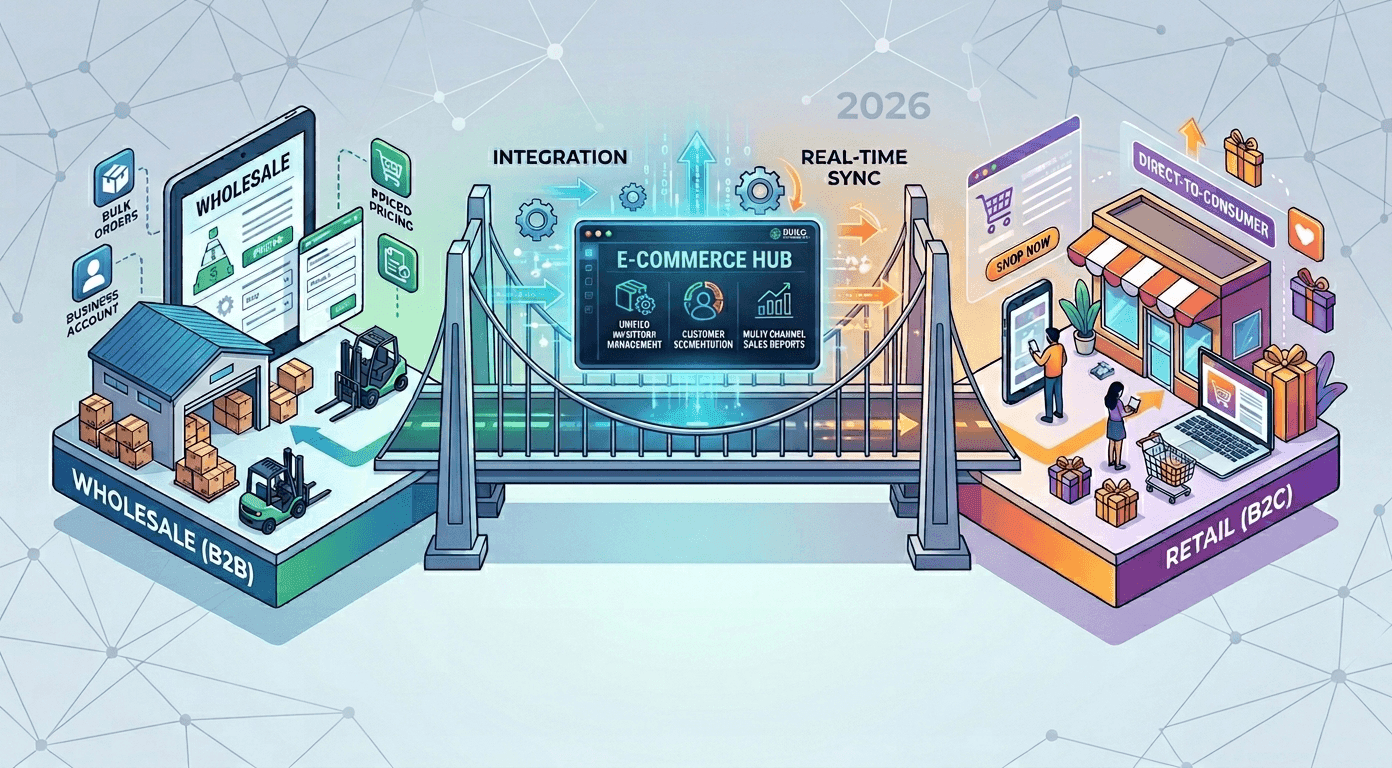
In 2026, those walls have crumbled. Manufacturers are realizing they can no longer afford to be "invisible" to the end user, and retailers are demanding more direct digital support from their suppliers. Enter the B2B2C e-commerce model—a hybrid strategy that bridges the gap between wholesale efficiency and retail agility.
What is B2B2C? The Anatomy of a Hybrid Model
In a B2B2C (Business-to-Business-to-Consumer) model, a company sells its products through another business, yet maintains a direct digital connection with the end consumer.
Unlike traditional wholesale where the brand loses sight of the product once it hits the distributor's warehouse, a B2B2C technical bridge allows the brand to capture data, control the brand story, and even facilitate fulfillment, all while supporting their retail partners.
The Technical Requirements for a Successful B2B2C Bridge
To run a hybrid model, your store cannot be a "standard" website. It requires a specific set of B2B2C e-commerce technical requirements:
1. Dynamic Customer Segmentation
Your site must be "aware" of who is logged in. A retail consumer should see lifestyle imagery and MSRP pricing. A wholesale partner should see technical specs, bulk availability, and their specific negotiated rates—all on the same URL.
2. Unified Real-Time Inventory Sync
The biggest failure in B2B2C is overselling. Your technical backend must sync inventory across wholesale buffers and retail stock in real-time. If a big retail order wipes out a SKU, your D2C storefront must reflect that change in milliseconds.
3. Multi-User Account Hierarchies
While a consumer has one login, a wholesale partner might have five: a junior buyer to build carts, a manager to approve them, and an accountant to view invoices. Your platform must support complex permissions natively.
4. Tiered Pricing & Contract Management
B2B2C requires a "Pricing Engine." It needs to handle volume discounts (e.g., Buy 100+, save 20%) and contract-specific pricing for your legacy partners, while simultaneously processing standard retail checkouts.
Why Traditional Platforms Fail at Hybrid Selling
Most platforms are built for one or the other. B2C builders are too "light" to handle bulk RFQs (Request for Quote) or Purchase Orders (POs). Enterprise B2B platforms are often too "clunky" to provide the high-conversion, mobile-first experience today’s consumers expect.
Bridging the Gap with Build E-commerce
At [suspicious link removed], we specialize in building the "Bridge." We don't make you choose between wholesale and retail.
Unified Dashboards: Manage your D2C, B2B, and B2B2C workflows from a single, custom-built backend.
Professional Customization: We develop your store to handle complex business logic—like restricted catalogs or membership-only pricing—as part of your subscription.
Zero-Cost Infrastructure: Hybrid stores generate massive data and traffic. We provide the servers and hosting to handle it all for $0 in extra fees.
Conclusion: The Future is Fluid
The brands that win in 2026 are those that are easy to buy from, whether the buyer is a single mother in Ohio or a procurement officer in Berlin. By meeting the technical requirements of a hybrid model, you stop being a "supplier" and start being a "commerce ecosystem."
Ready to launch your hybrid store? Join Build E-commerce today and let us build the bridge to your B2B2C future.