
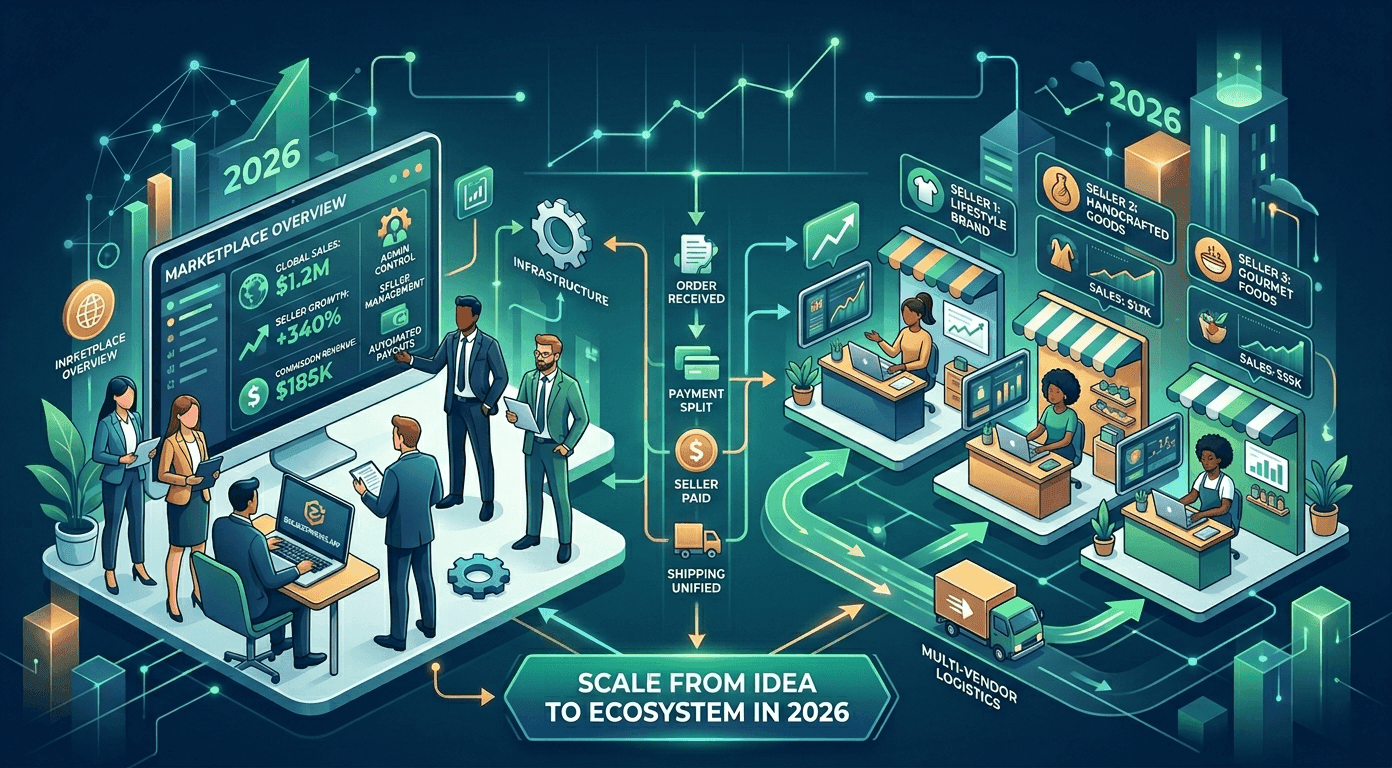
Building a Multi-Vendor Marketplace in 2026: A Step-by-Step Guide to Success
The most valuable companies in e-commerce today aren't just selling products; they are providing the platform where others sell. From specialized niche marketplaces for sustainable fashion to B2B industrial hubs, the "Multi-Vendor" model is the ultimate path to scalability in 2026.
However, building a multi-vendor marketplace is fundamentally different from launching a standard D2C store. While a regular store is a straight line from brand to customer, a marketplace is a complex ecosystem.
The Multi-Vendor Reality Check: Why It’s Not Just a "Big Website"
Most entrepreneurs underestimate the "Technical Headaches" involved in managing multiple sellers. You aren't just managing inventory; you are managing people who manage inventory. * The Three-Sided Transaction: Every sale involves the Buyer, the Seller, and the Platform (you). Synchronizing data between these three in real-time is where most DIY plugins fail.
The Logistics Nightmare: If a customer buys a shirt from Seller A in New York and a hat from Seller B in London, how do you calculate shipping? How do you handle a return if only one item is defective?
Step 1: Defining Your Marketplace Architecture
In 2026, you cannot afford "clunky" interfaces. Your sellers need a professional dashboard where they can track sales, manage their own listings, and talk to customers. At the same time, your administrators need a "God-view" to monitor the entire ecosystem.
Step 2: Automated Seller Onboarding
Scalability dies when things have to be done manually. To succeed, your platform must allow sellers to apply, get verified, and upload products with zero intervention from your team. [suspicious link removed] specializes in creating these automated workflows, customized to your specific business requirements.
Step 3: Solving the Payout and Commission Puzzle
The fastest way to lose sellers is to mess up their money. In 2026, sellers expect automated payouts. You need a system that:
- Collects the full payment from the buyer.
- Automatically deducts your marketplace commission.
- Routes the remainder to the seller's bank account via integrated gateways.
Scalability in 2026: Handling 10 vs. 10,000 Sellers
A marketplace that works for 10 sellers often breaks at 100. Server load, database queries, and support tickets grow exponentially. Traditional e-commerce hosting often throttles marketplace traffic, leading to crashes during peak shopping periods.
Why Build E-commerce is the Secret Weapon for Marketplace Founders
We remove the "Technical Wall" that stops most marketplace ideas from becoming reality.
We Build the Complexity For You: Multi-vendor setups are notoriously expensive for agencies to build (often $50k+). With Build E-commerce, the development and customization are included in your subscription.
Zero-Cost Infrastructure: We provide the enterprise-level servers required to host thousands of seller stores without you ever seeing a "Server Overload" error.
24/7 Support for You and Your Sellers: We act as your outsourced CTO, ensuring the platform stays live while you focus on recruiting the best vendors in your niche.
Conclusion: From Idea to Ecosystem
Building a marketplace is about building trust. Trust that the site won't crash, trust that the shipping will work, and trust that sellers will get paid. By offloading the technical complexity to a growth partner, you can stop fighting with code and start building your ecosystem.
Ready to build the next great marketplace? [Join Build E-commerce today] and let us handle the heavy lifting while you scale.